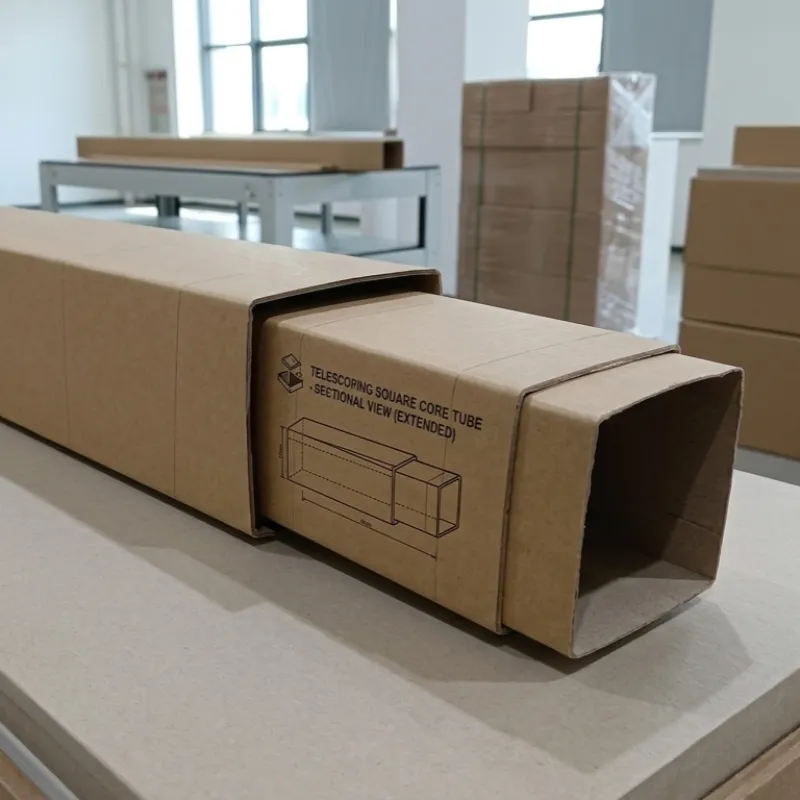
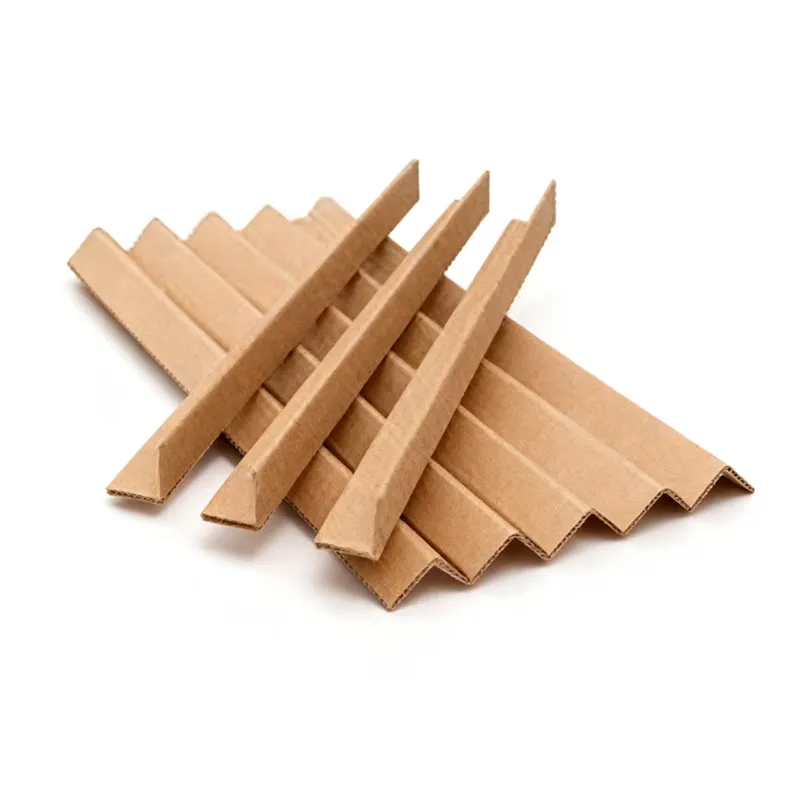
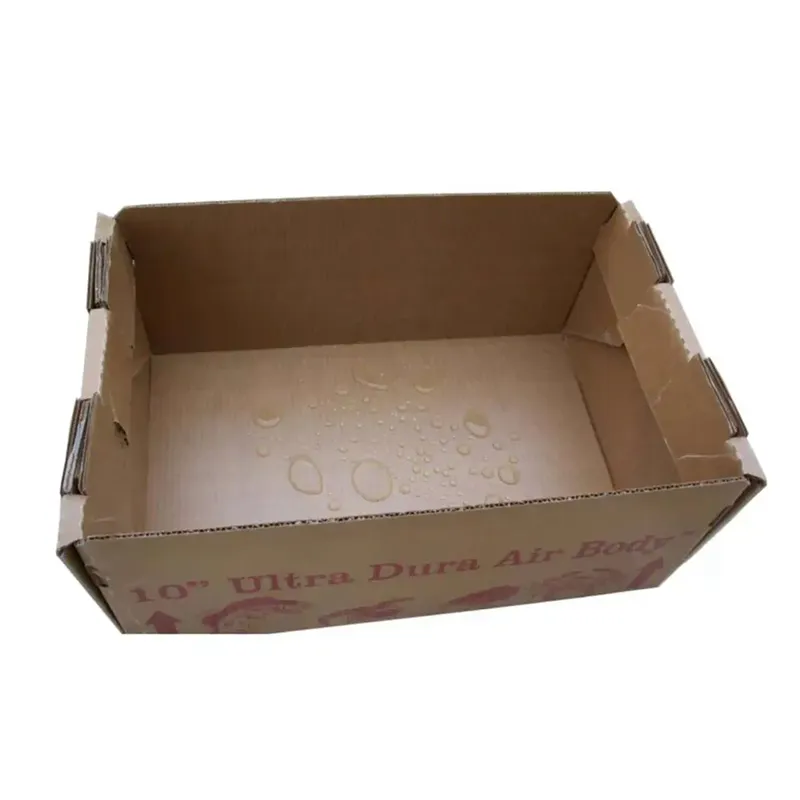
At Yilida's six angle boards production lines, you can find various types of paper corner protectors, including L-shaped, U-shaped, and round ones. 20 years of production experience has given us advanced technology and production capabilities, ensuring our products meet standard moisture content requirements and are ISO9001 certified, certified by PONY Testing, and FSC certified (100% recycled and MIX100%).
What are Paper Corner Protectors?
The paper corner protector, also known as edge protector or paper wrapped corner, is a high-strength paper packaging material made by bonding multiple layers of yarn tube paper and cow card paper with special glue and then pressing and shaping. It has the characteristics of low price, light weight, strong and environmentally friendly, and 100% recyclability. It is an ideal green packaging material. Its classification methods are diverse, and it can mainly be divided according to the cross-sectional shape and functional use.
How to quickly select the type of protective corner based on the goods?
|
Goods form
|
Preferred type
|
Protective target
|
Recommended specification
|
Special requirements for logistics environment
|
|
Spherical cuboid goods
|
L-shaped
|
Reduce packaging pressure and protect the surface
|
Light goods: 30*30*3mm
Medium goods: 40*40*4mm
Heavy goods: 50*50*5mm
|
Automated production line: Choose L-shaped, with smooth surface without burrs
|
|
Sheet/Plate-shaped Goods
|
U-shaped
|
Cover the fragile edges of the package to prevent stress concentration
|
Make the opening width according to the product thickness. Thickness ≥ 3mm
|
High humidity/Sea transportation: Choose waterproof type, moisture content ≤ 10%
|
|
Circular/rolled goods
|
Encircling type
|
Protect the end surfaces from being crushed or scratched
|
Inner diameter fits the roll diameter, thickness ≤ 4mm
|
Long-term outdoor storage: coated or waterproof treatment
|
|
Special-shaped/non-linear goods
|
Bent type/abnormal shape
|
Protection for irregularly shaped end faces
|
Customized according to the drawing, thickness determined based on load-bearing capacity
|
----
|
First, determine the type based on the shape of the goods, then select the specification according to the weight, and finally add special requirements based on the logistics environment - combining the three elements, you can avoid making wrong selections.
Introduction to Four Types of Paper Corner Guards
1. L-shaped Paper Corner Guard
The L-shaped paper corner guard has a 90° right angle. Both sides can be designed to be equal width or unequal width. It is used for reinforcing the corners of paper boxes, securing goods on pallets, and protecting the edges to prevent crushing of the corner edges during handling and maritime stacking. It is widely used in container shipments and furniture edge protection. Most foreign trade orders choose this type.
2. U/V-shaped Slot-type Paper Corner Guard
The U/V-shaped slot structure can grip the edges of the board and paper box, wrap the side of the board, and can be adjusted in terms of angle or width according to the edge of the product. It is suitable for boards, door panels, and glass edge protection, and has a stronger anti-bump effect.
3. Surrounding (Circular) Paper Corner Guard
Circular/arc-shaped corner guards, suitable for protecting the ends of cylinders, paper tubes, and roll materials. They tightly protect the ends. Protect the end surface of the roll material from being damaged.
4. Bent Special-shaped Corner Guard
Pre-fabricated creases, bendable, suitable for bending the edges of irregular workpieces and unregular goods, mostly used for furniture and hardware export packaging.
5. Special Processing of Guard Corners
According to customer requirements, the corner guards can undergo special processing. For example, in terms of waterproof and moisture-proof, three processes can be carried out: surface coating with water-resistant film, waxing treatment, and applying waterproof glue coating.
Comparison of Guard Angle Parameters
|
Material type
|
Base material composition
|
Core performance
|
Waterproof property
|
Compressive strength range
|
Typical thickness
|
Advantages and disadvantages
|
|
Regular paper tube + cow card paper (standard model)
|
Inner layer is paper tube, outer layer is cow card paper, water-based glue laminated
|
High hardness, good stiffness, good resistance to compression during regular stacking
|
Generally, it will become soft in humid environments
|
500‑1500N
|
3‑10mm
|
High cost performance, recyclable and free from fumigation; prone to moisture absorption, not suitable for high-humidity environments
|
|
Full-sized cardboard corner protection
|
Completely made of cow cardstock, without any mesh paper
|
The surface is smooth, does not shed easily, and has excellent printing quality
|
General
|
400‑1200N
|
3‑7mm
|
High-end products, requiring printing of logos, food-related packaging
The appearance is clean; the cost is relatively high, and the pressure resistance at the same thickness is slightly lower than that of the rayon tube paper model.
|
|
Wax-coated waterproof paper corner protection
|
Wax-coated paper / cow cardboard base material, surface treated with wax
|
Waterproof and splash-proof, resistant to condensation water, suitable for low temperatures
|
Excellent
|
500‑1300N
|
4‑8mm
|
Cold storage, shipping containers, damp warehouses, ice cream low-temperature goods Resistant to moisture and condensation; not suitable for complete immersion, as it may be affected by the wax coating
|
|
Recycled waste paper corner protection
|
Recycled OCC waste paper composite
|
Lowest cost, moderate stiffness
|
Poor
|
200‑600N
|
3‑5mm
|
Domestic light goods, temporary turnover packaging Low price; strength fluctuates greatly, not suitable for export heavy goods
|
|
High-strength composite paper corner guards
|
High-gauge wire tube paper + thickened kraft paper multi-layer pressed
|
Extremely high compressive and bending resistance
|
General
|
1200‑2000N
|
6‑10mm
|
Heavy machinery, tiles, large-tonnage pallet stacking
Strong load-bearing capacity; high unit price, greater self-weight
|
Application Scenarios Introduction
1. Overall Solidification and Anti-Traffic Tape Damage Prevention Scheme
Usage: Place four L-shaped paper guards on the four outer corners of the goods on the pallet, and fix them with PE wrapping film. If there is a traffic tape at the top, place four L-shaped guards horizontally on the four horizontal edges at the top as well.
Combination: Combined with PET traffic tape and PE wrapping film.
Function: The traffic tape directly presses against the paper guards, preventing the paper box from being punctured. At the same time, it ties the scattered goods together with the pallet into a solid whole, preventing transportation shaking and tipping.
2. Internal Column Reinforcement Scheme for Paper Boxes (Increasing Stackable Layers)
Usage: Place 4 L-shaped paper guards vertically at the four right angles inside the paper box with the same net height as the paper box.
Function: Acts as a "load-bearing beam". Without increasing the thickness of the paper box wall, it can increase the compressive strength of the paper box by 20% to 50%, doubling the stackable layers and significantly saving storage and transportation space.
3. Three-sided Wrapping Scheme for Boards and Furniture Edges
Usage: Select U-shaped paper guards that match the thickness of the board and directly fasten them to the four edges of doors, tabletops, marble boards, or metal profiles.
Function: Prevent damage such as chipping, scratching and falling during transportation, and the loading and unloading process is extremely fast.
Production Process of Paper Corners
The inner layer of the ordinary paper corner protector is made of mesh paper, while the outer layer is made of kraft paper. The mesh paper and the kraft paper are bonded together using environmentally friendly starch glue. Both the outer and inner layers can be customized according to the customer's requirements, and they can be treated with waterproof or moisture-proof impregnation.
1. Specific processes
The first step involves cutting the base paper. Based on the customer's required edge width, thickness, and number of layers for the protective edge, the large paper roll is divided into strips of the corresponding width, ensuring that the edge of the paper has no burrs and the moisture content is 8% to 12%. The second step is to place the cut paper rolls on the paper feeding frame and install them on the production line paper frame. The paper is fed in sequence, with thicker paper requiring more layers of paper.
The third step is to apply glue. The paper strips pass through the glue roller and are evenly coated with water-based starch glue. The amount of glue should be controlled properly; too little glue will cause delamination, while too much glue will result in overflow and deformation.
The fourth step is to press the multi-layer paper into shape. The multi-layer paper strips converge and the face paper is wrapped around the edge. They enter a group of V-shaped pressing wheel molds for continuous extrusion, directly forming 90° L-shaped long protective edges. The interlayer air bubbles are simultaneously compressed and removed to ensure the straight corners are upright.
The fifth step is to solidify and shape. The long protective edges after shaping continue to be transported by the press roller group. The glue initially solidifies; when they are just off the production line, they need to be placed in a dry and ventilated area to mature and reach the required hardness. The length can be precisely cut by the PLC, and the cutting is synchronized and tracked. The blade cuts, and the cut edge is smooth and free of burrs. Different lengths can be produced, and custom cuts such as slanted cuts and notches are also supported.
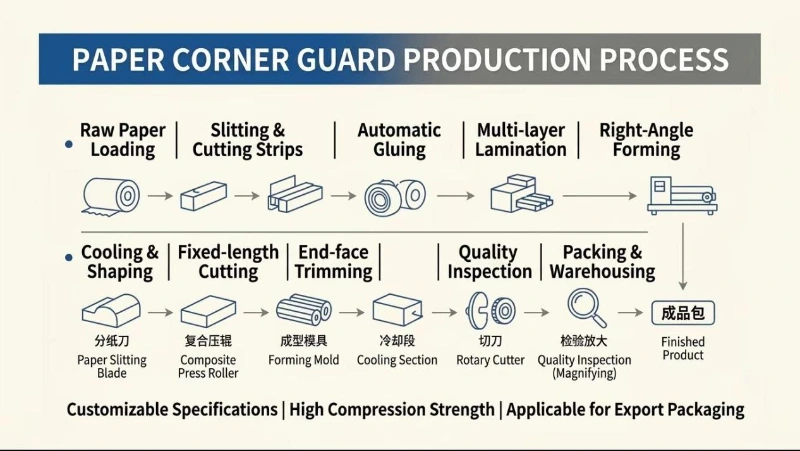
2. Final Product Inspection
After the product is completed, it enters the final inspection stage to ensure that there are no issues such as delamination, blistering, wrinkling, or overflow of glue on the product's appearance. In terms of size, it is ensured that the width, thickness, and length are within the tolerance range.
Random inspections of flat pressing strength and bending strength are conducted to ensure that the corner protection strength is within the customer's specified range. For special orders, waterproof and anti-static tests are also performed on the products.
Finally, the products are stacked, packed for storage, counted and packed according to specifications, stacked on pallets, stored in the warehouse with moisture-proof measures, and labels and customer logos can be printed as well.
Why Choose Us
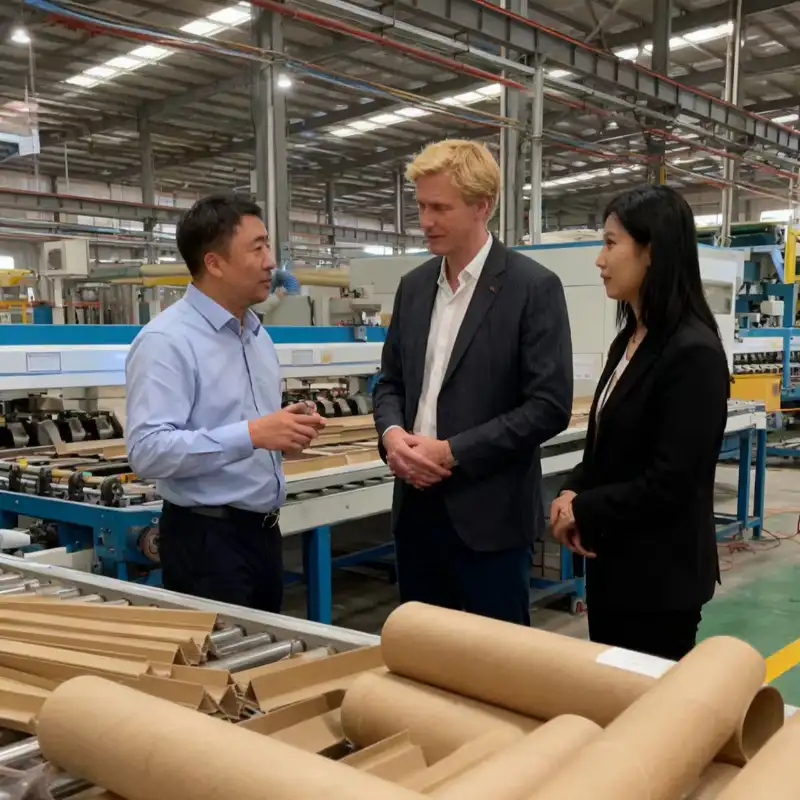
Our company is an actual production factory, equipped with a complete paper corner protection production line and a quality inspection laboratory. We offer on-site visits or remote video factory inspections, allowing us to fully demonstrate the real production lines, warehouses, etc. Our production and export qualifications are all complete.
We can provide business licenses, FSC forest certification, ISO three-system certifications, third-party test reports for paper boxes, paper corner protection's compressive strength, and waterproof performance, meeting the requirements for export audits and factory inspection materials.
We have extensive experience in supplying to North America and understand the factory inspection and document review standards of overseas customers. Each batch of goods is subject to random inspection upon leaving the factory. We can conduct sample testing as needed. The contract terms are clear, and the delivery date and quality can be traced.
FAQ
1. Will the corner guards lose their effectiveness after being stored in the warehouse for a long time? What should be noted in inventory management?
Yes. The factory storage period for ordinary paper corner guards is generally no more than 12 months. The structural stability of the waterproofed high-strength corner guards can be maintained for 2-3 years.
The bottom layer of the warehouse should be at least 150mm above the ground. Do not stack them against the wall. It is strictly prohibited to use stretch film for long-term packaging. The corner guards should maintain air circulation, and the warehouse should follow the principle of first-in, first-out.
2. Compared to traditional protective corner materials, what are the advantages of paper protective corners?
Compared to traditional protective corner materials, paper protective corners offer higher cost performance, lighter weight, lower transportation costs; they are environmentally friendly and recyclable, degradable, without pollutants, and comply with the environmental export standards of various countries; they have a tough texture with good support, do not scratch the product surface, and can be customized for printing, suitable for various export and domestic sales packaging scenarios. They are currently the mainstream choice for logistics packaging to replace plastic and wooden protective corners.
3. What are the standard specifications of paper protective corners? Can they be customized?
Standard specifications: side length 30–100mm, thickness 2–7mm, length can be cut arbitrarily. Full-size customization is supported, including special side lengths, thickened reinforced models, ultra-long/ultra-short sizes, and custom U-shaped, flat-shaped and other irregular protective corners to meet different product packaging needs.
4. Can LOGO, text and identification be customized on the paper protective corners?
Customization for printing is supported. The surface of the paper protective corners can be printed with enterprise LOGO, brand names, anti-counterfeiting labels, transportation warnings, barcodes, etc., helping to standardize packaging for the brand and enhancing the overall grade of the product.
5. Are paper protective corners environmentally friendly? Can they be exported to Europe and the United States?
Paper protective corners are made of pure kraft paper, 100% recyclable, degradable, and pollution-free. They belong to green packaging materials and fully comply with the environmental standards of many countries such as the EU and the United States, with no export restrictions. If FSC or other environmental certifications are required, they can be provided as needed.
Quotation cooperation method
Quotation requests can be sent via email or WhatsApp. We welcome you to request product catalogues and quotation sheets